Home
LACQUER FROM VIETNAM
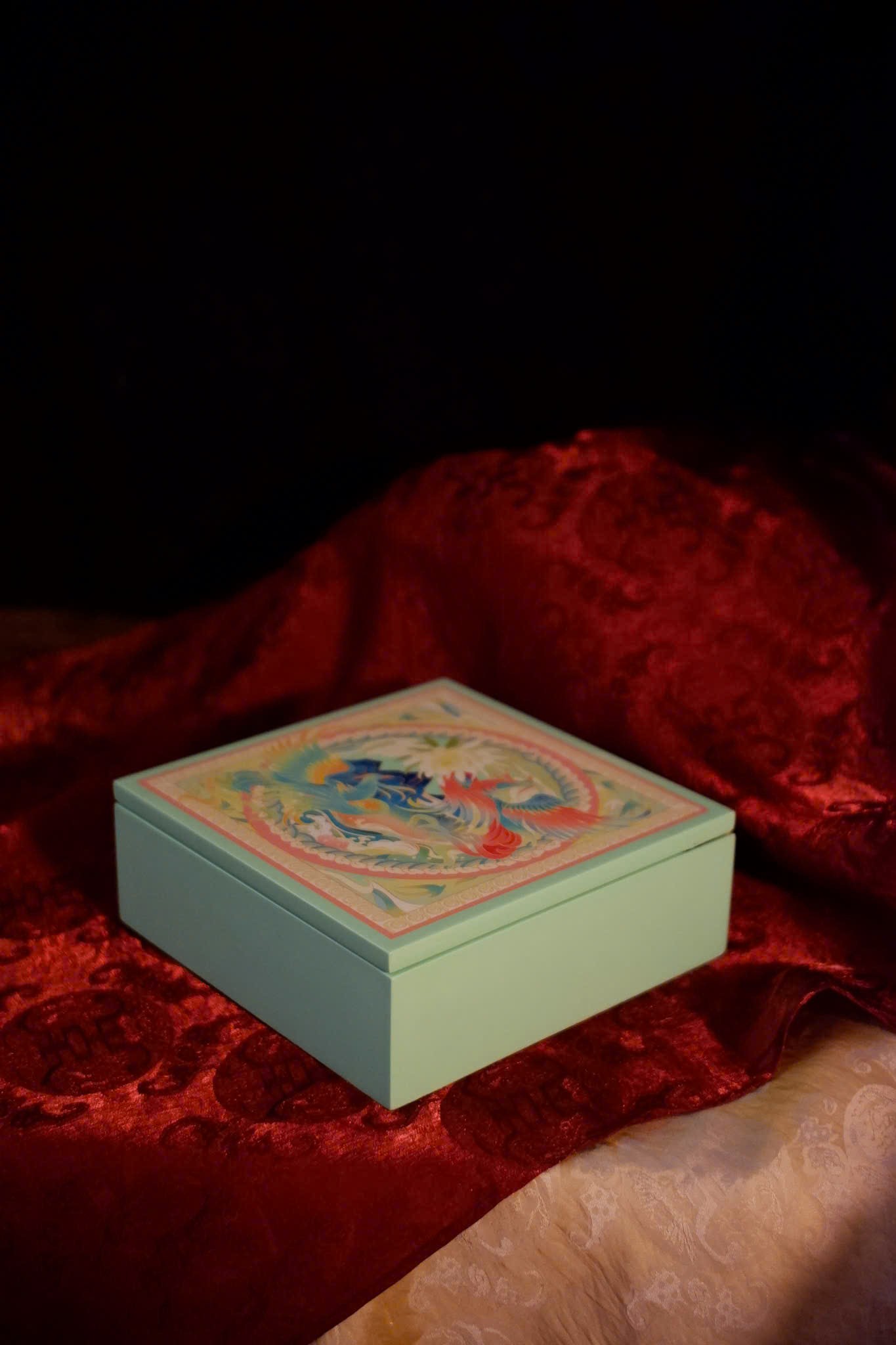
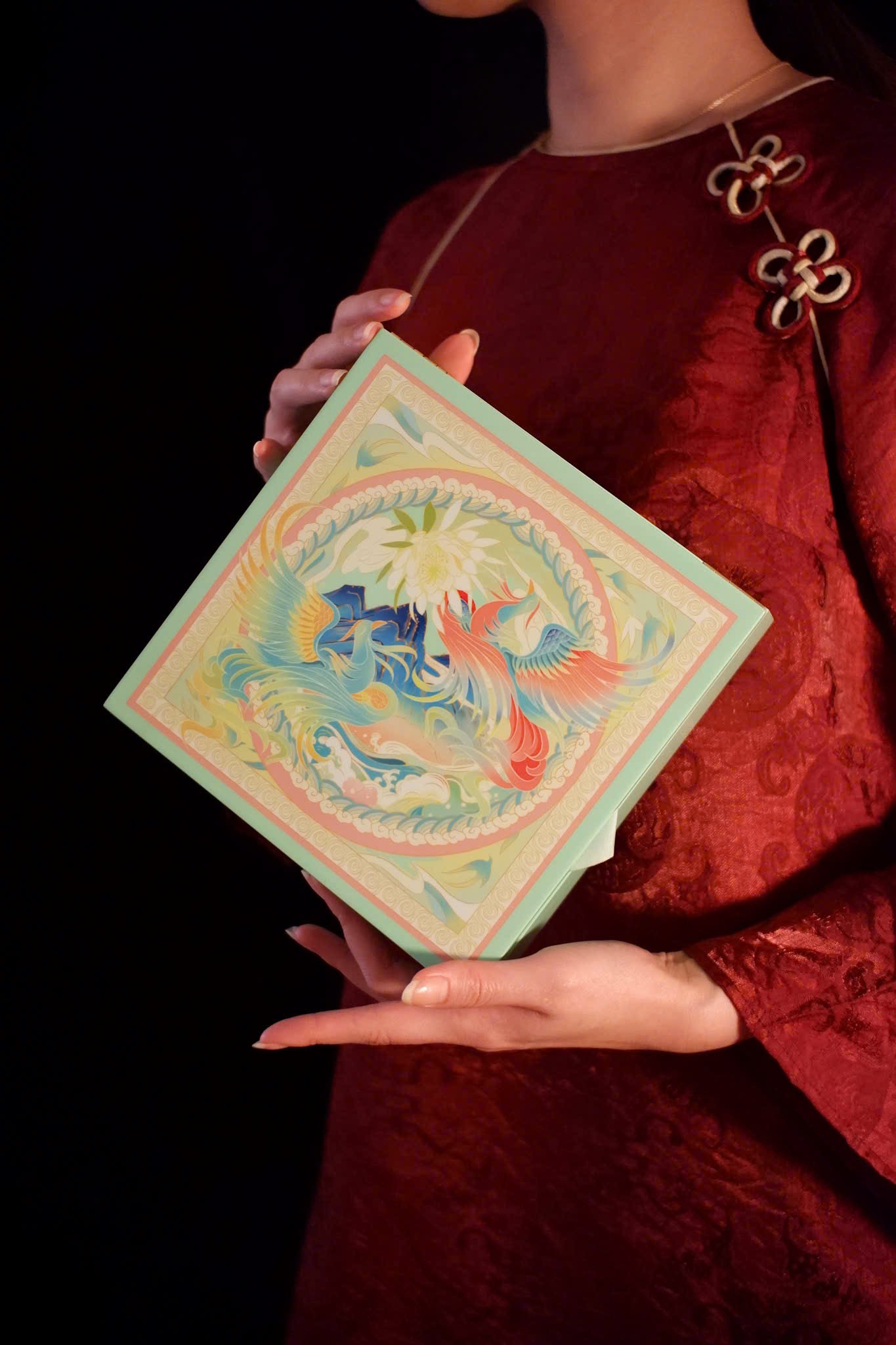
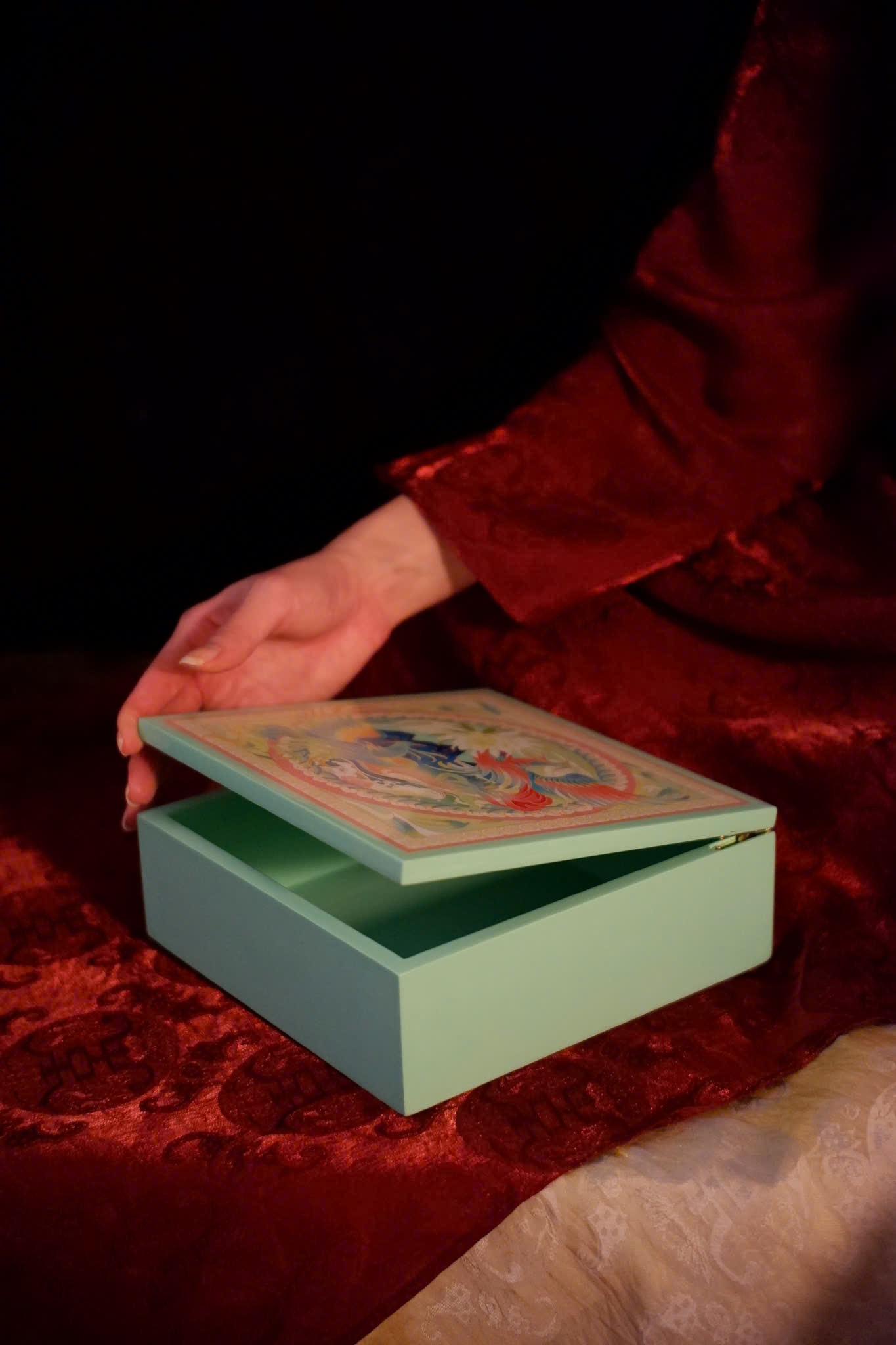
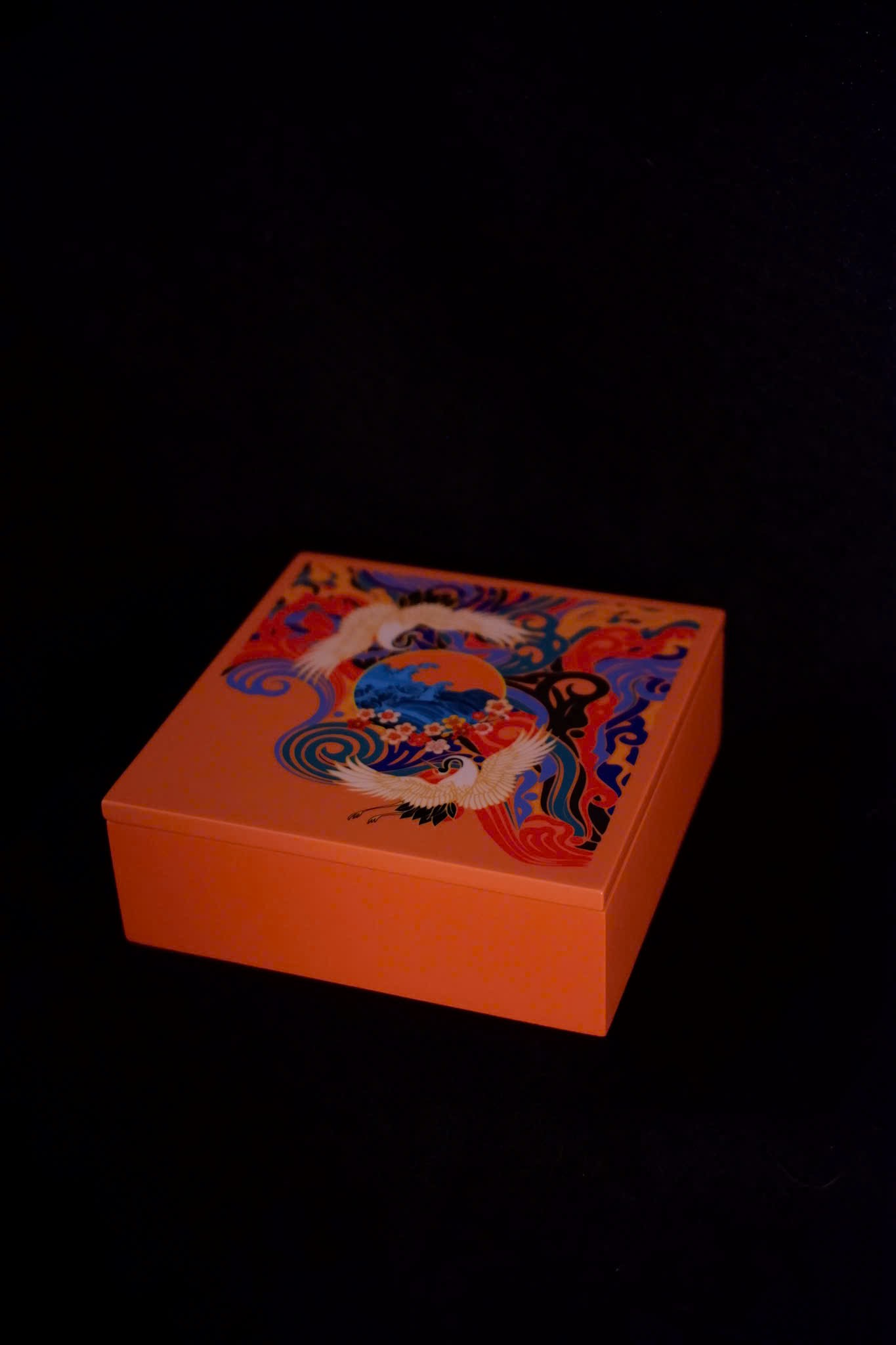
Vietnamese lacquer is not made in a day. It is built slowly, through repetition, patience, and skilled hands. Each piece begins as a simple form —MDF — carefully shaped and prepared. The surface is sealed and then coated with liquid lacquer, a natural resin traditionally taken from lacquer trees in Northern Vietnam. When first collected, this resin is pale and milky. As it reacts with air, it darkens and slowly hardens, becoming durable and strong. After one layer dries, it is sanded by hand. Then another layer is applied. And again it dries. And again it is sanded. This cycle is repeated many times — sometimes more than a dozen layers — because lacquer is not about covering a surface; it is about building it. The depth, smoothness, and quiet shine of lacquer come from this repeated process. There are no shortcuts. If a layer is rushed, the final surface will not have the same strength or clarity. To prevent cracking and ensure durability, early layers may be reinforced before more lacquer is added to create thickness and stability. Decoration is applied only after the surface is properly prepared. Patterns, colors, or details are placed carefully, then sealed beneath additional coats so that the design becomes part of the surface itself. It is protected inside the lacquer, not sitting on top of it. The final stage is polishing. This is when the true character of lacquer appears. The surface becomes smooth, almost soft to the touch, with a depth that changes gently under light. It does not look like ordinary paint. It feels layered, solid, and calm. The full process can take weeks or even months, regardless of the size of the object. What may appear simple carries many quiet hours of work behind it. Vietnamese lacquer survives today because artisans continue to repeat these traditional steps with care. When you hold a lacquer piece, you are holding a material shaped by time, by hands, and by a craft that refuses to be rushed.
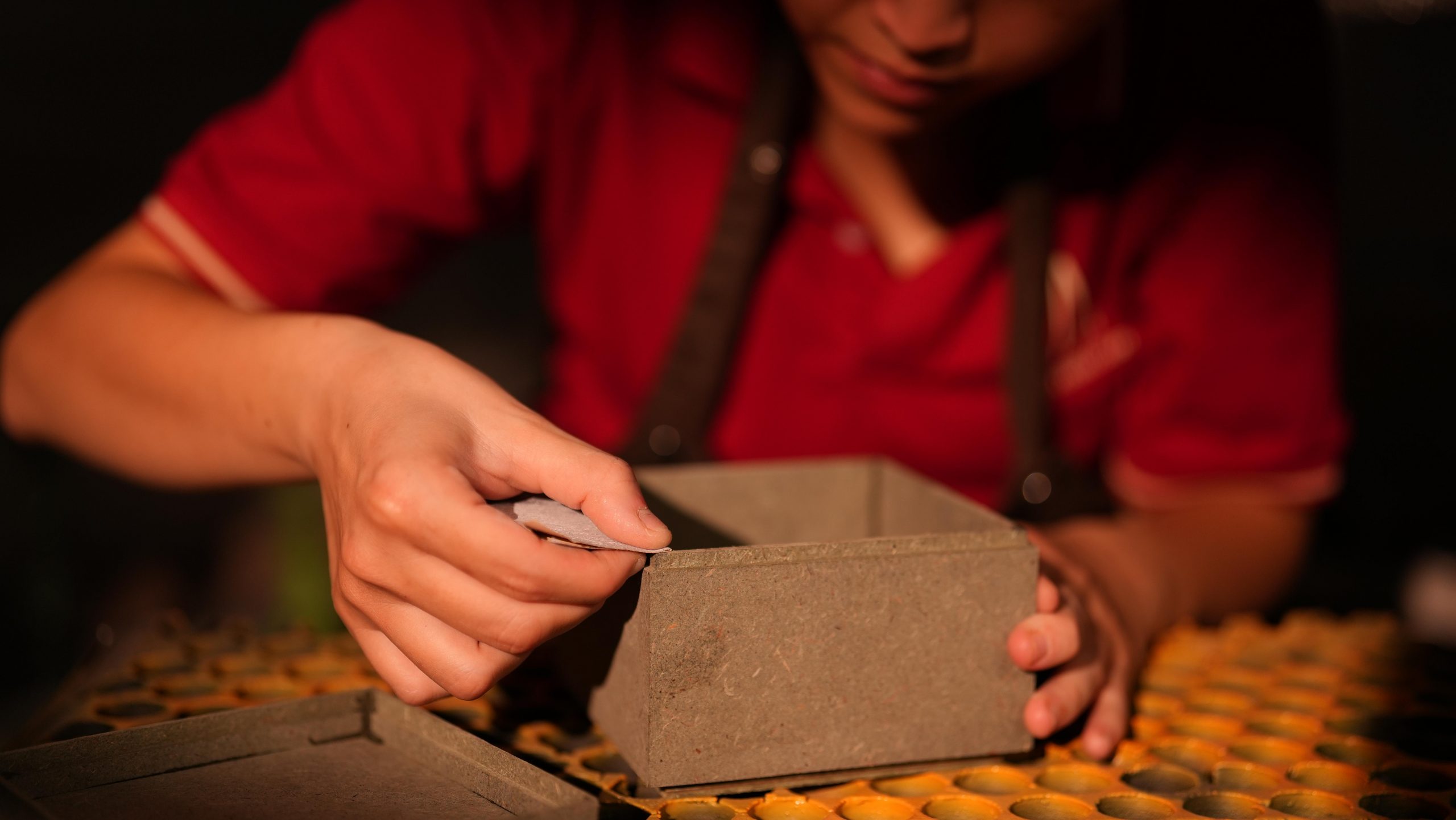
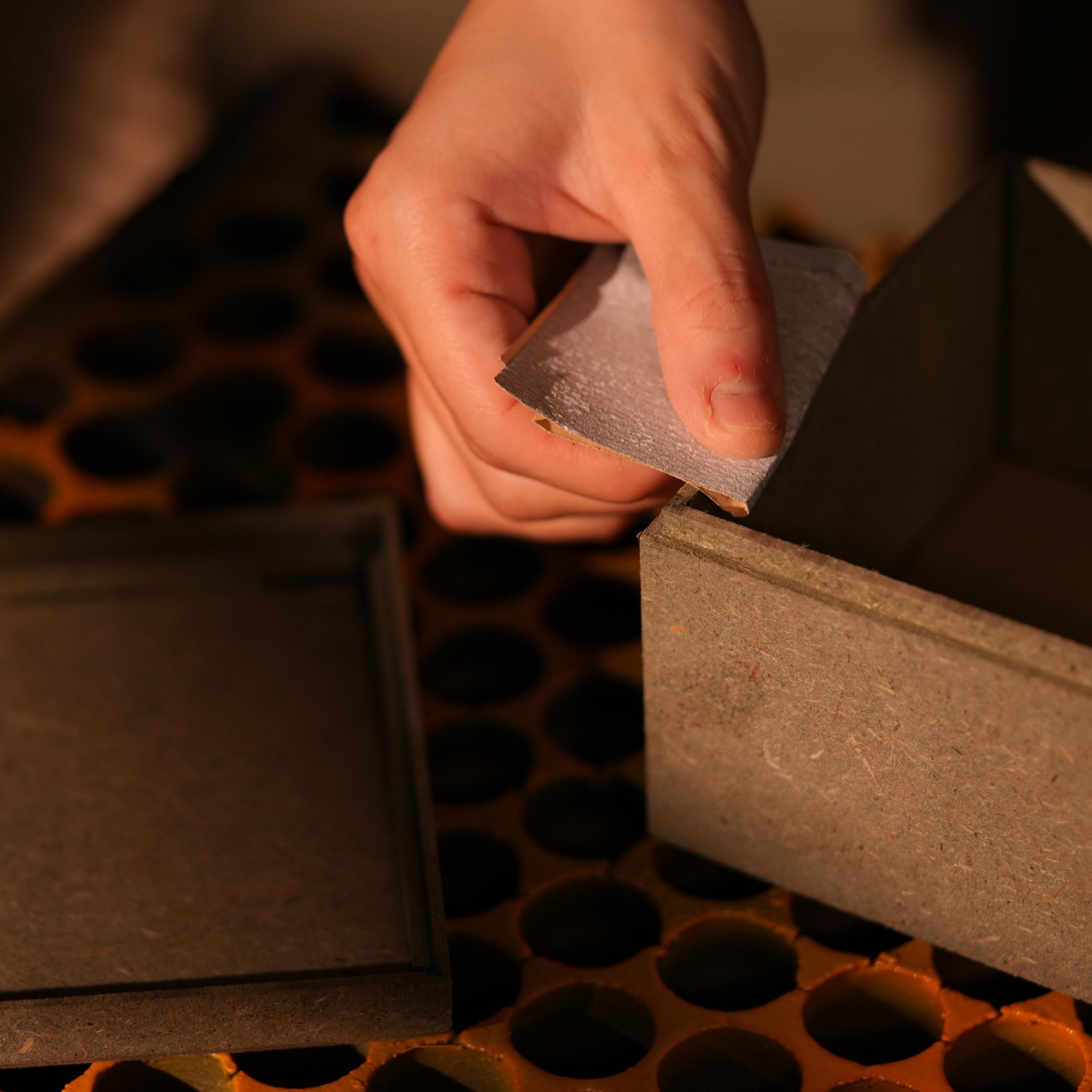
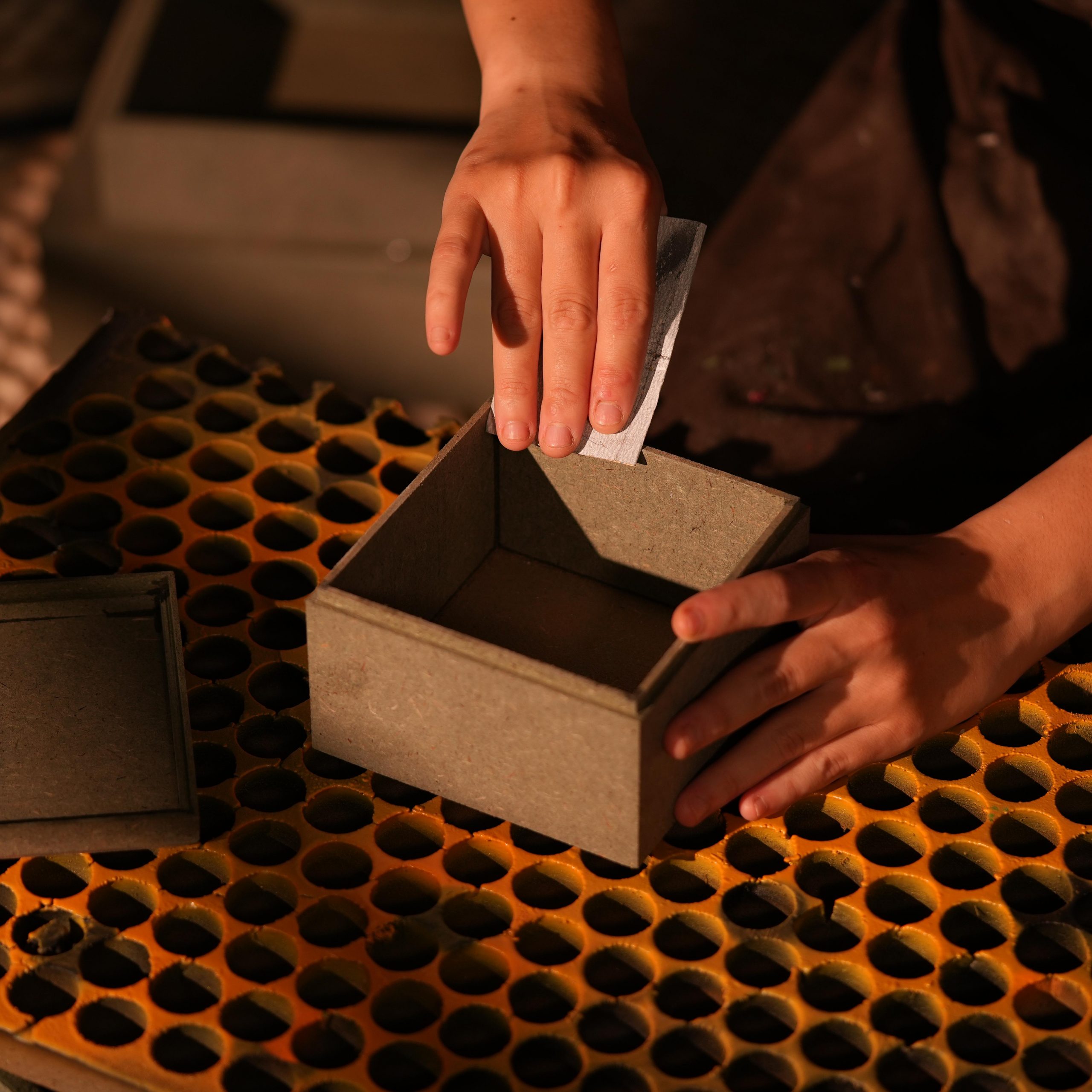
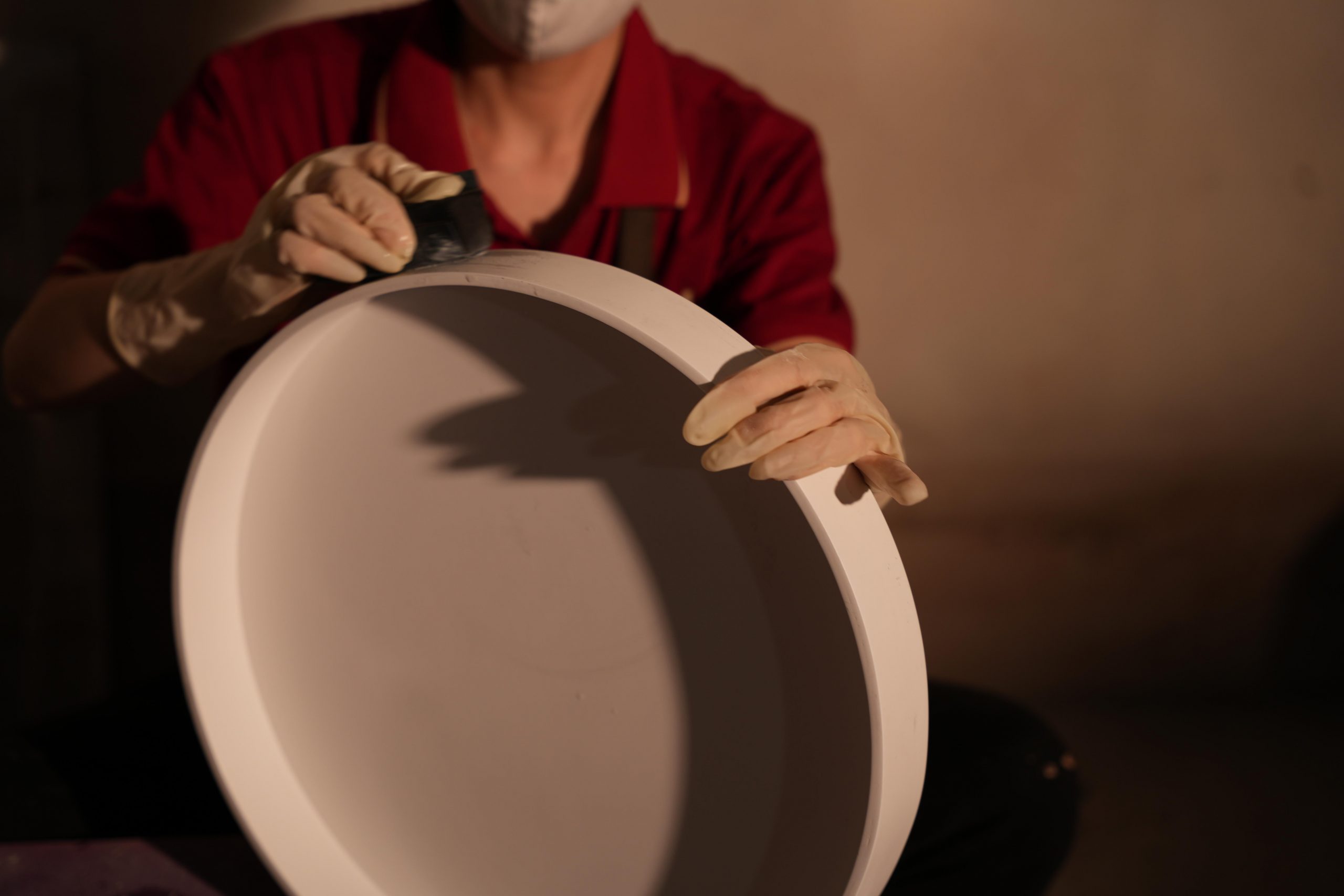
This stage shows the careful surface preparation before lacquering begins. The MDF base is sanded by hand to smooth every edge and corner, removing dust, rough fibers, and small imperfections. The artisan uses fine sandpaper to ensure the surface is even and clean, especially along the joints and inside edges of the box. This step is essential because lacquer requires a perfectly prepared foundation. Any unevenness left at this stage would remain visible under the later layers. By sanding slowly and precisely, the artisan creates a stable, smooth surface that allows the lacquer to adhere properly and build depth in the finishing process.
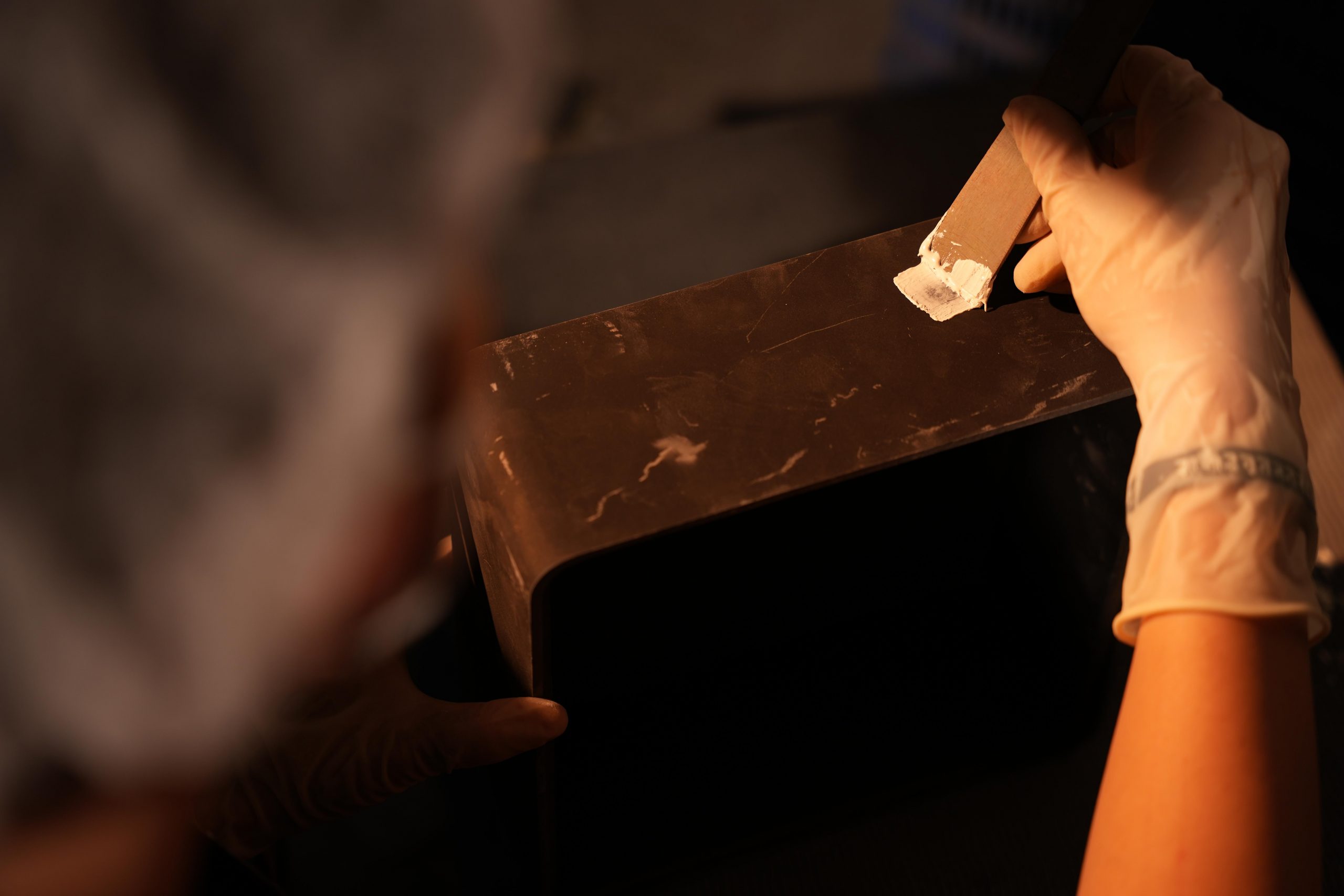
At this stage, the surface is carefully inspected and corrected to ensure perfect flatness before applying the final color layers.
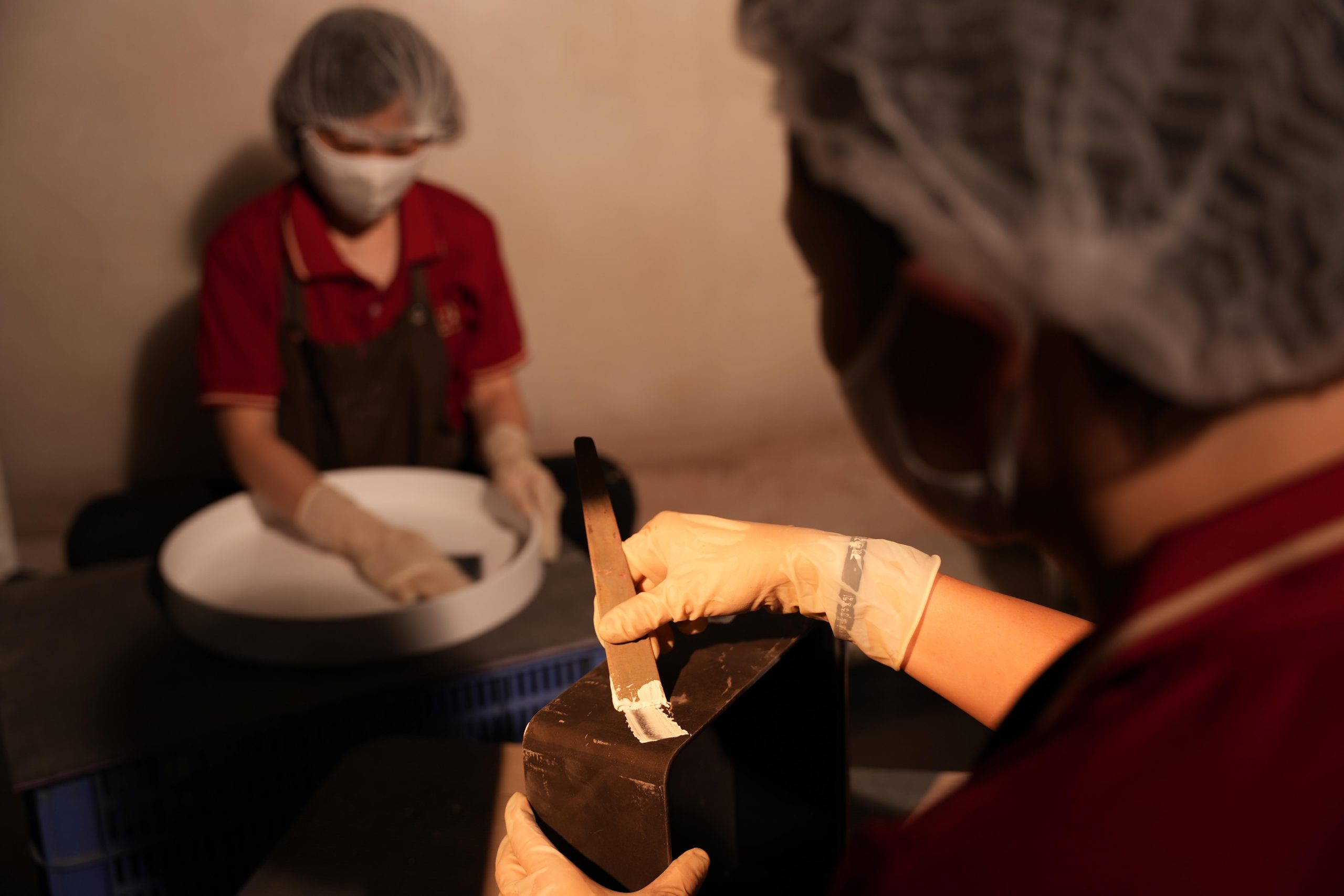
Any small gaps, joints, or uneven areas are filled with a special putty mixture. This filling process strengthens the structure and eliminates surface imperfections. After the filler dries, the piece is sanded by hand to smooth the surface and refine the edges.
This process of filling, sanding, sealing, and re-sanding may be repeated several times. Multiple thin layers are applied and polished gradually to build a stable and completely even foundation.
The purpose of this stage is to create the smoothest possible base before the color lacquer is applied. A perfectly leveled surface ensures that the final lacquer color will appear deep, clean, and consistent.
Without this careful preparation, the final finish would not achieve the clarity and depth required in Vietnamese lacquerware.
After the surface has been perfectly leveled and prepared, the lacquering process begins.
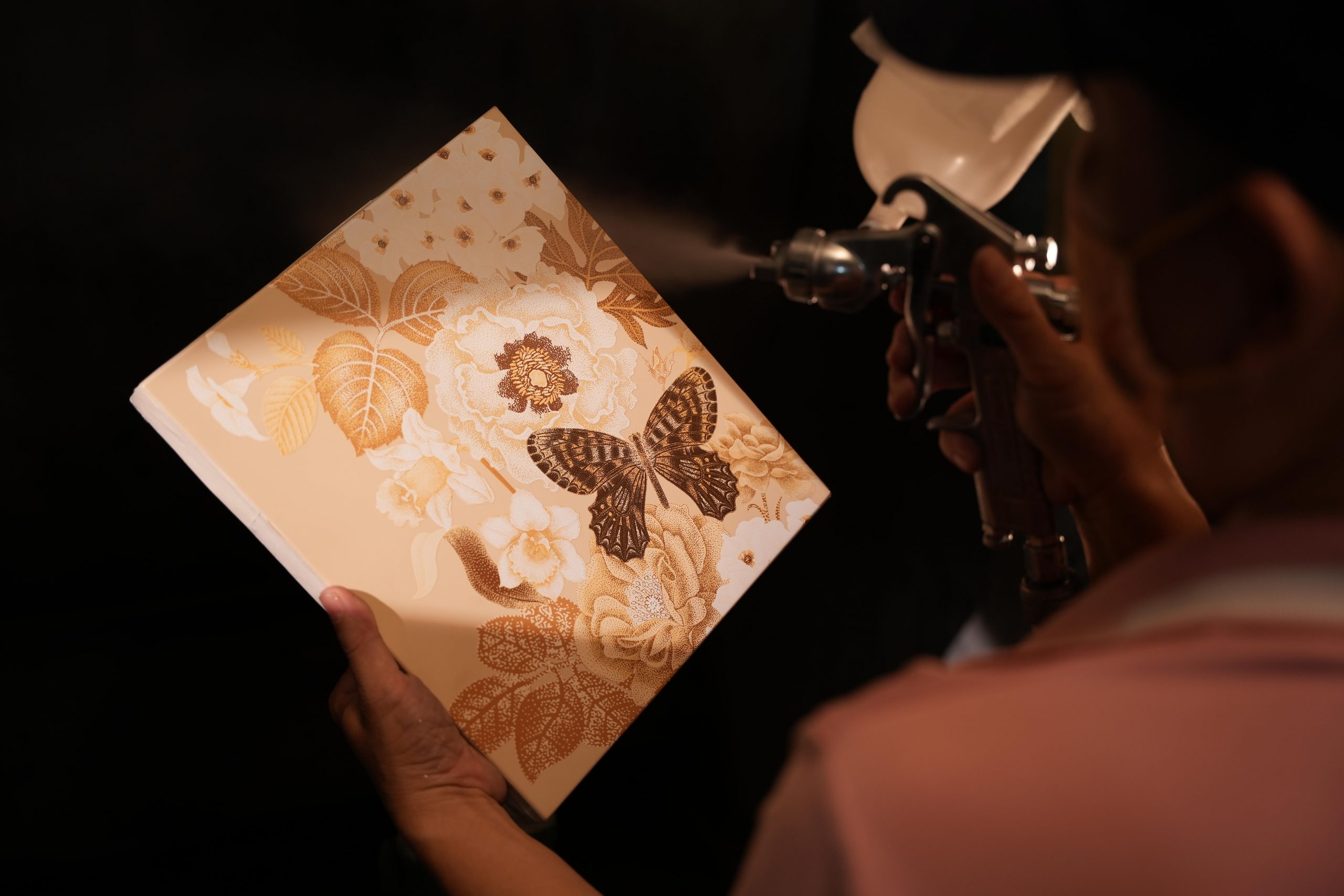
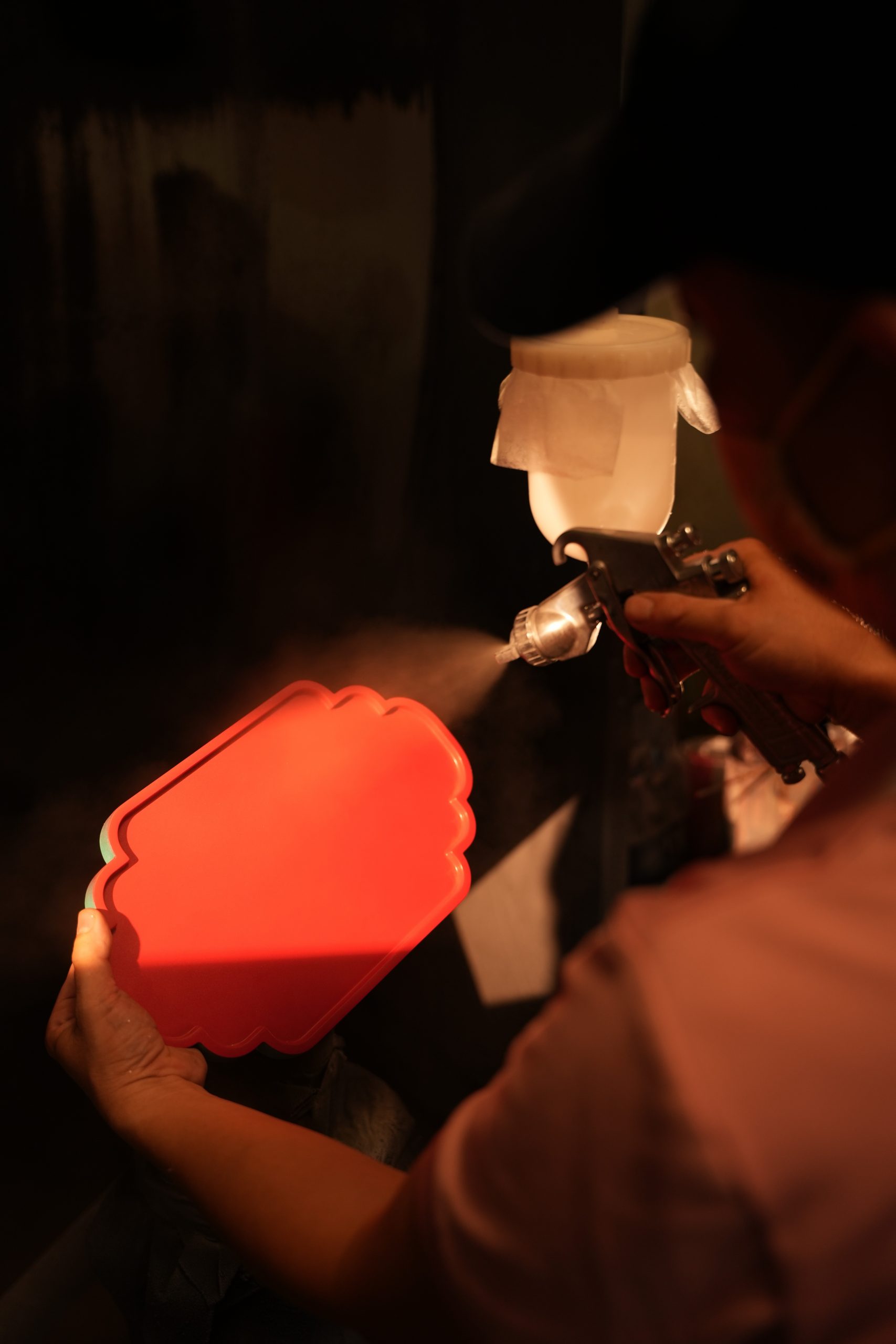
The artisan applies thin, even coats of lacquer using a spray gun in a controlled environment. Each layer must be carefully distributed to avoid uneven thickness, bubbles, or dust particles. Precision at this stage is essential because lacquer builds depth gradually through multiple applications.
Once a coat is applied, the piece is left to dry naturally. Lacquer cannot be rushed. Proper drying ensures strong adhesion and long-term durability. After drying, the surface may be lightly sanded again to remove any minor imperfections before the next coat is added.
This process — spray, dry, inspect, sand — is repeated many times. Multiple layers are required to achieve the desired color density, smoothness, and depth. Whether applying a solid color base or sealing decorative artwork beneath clear lacquer, each layer contributes to the final visual richness.
The goal of this stage is to build a stable, deep, and even lacquer surface that will later be polished to reveal its natural shine and layered character.
LACQUER HOME ACCESSORIES
Lacquer jewlery
Lacquer corporate gifts